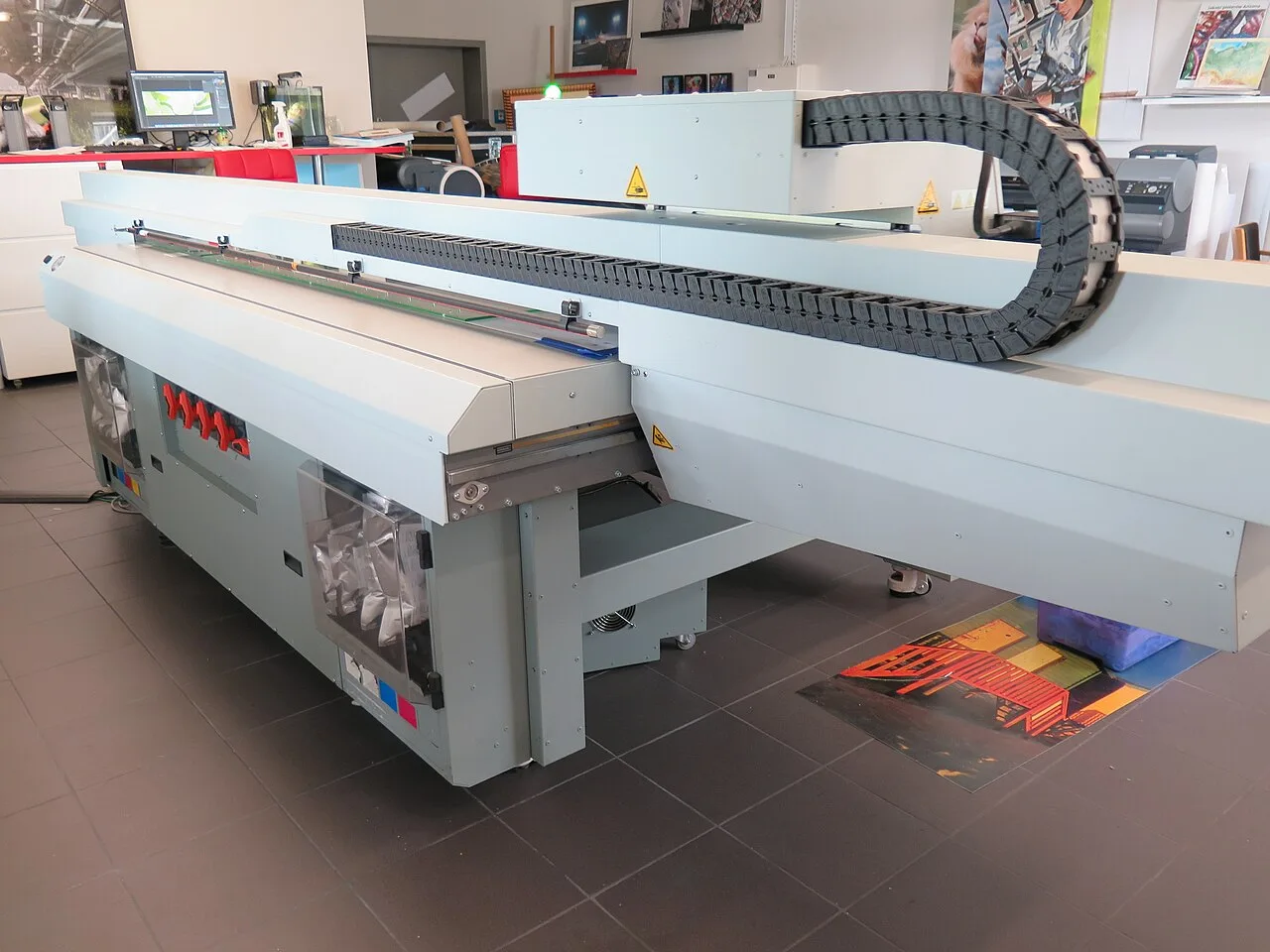
HP FB250 Aftermarket UV Ink
HP FB250 is the UV-curable ink platform engineered for the HP Scitex FB500, HP Scitex FB700 and HP Scitex FB950 flatbed printers — production UV machines running rigid-substrate work across sign shops, P-O-P printers, exhibit and trade-show shops, packaging-prototype shops, and industrial graphics shops in Florida and the Southeastern US. Our aftermarket HP FB250 UV ink is print-tested for color match and printhead compatibility on these flatbed presses, supplied on an inquiry basis to B2B production print shops.
This page is a quote request page. Tell us the colors and the quantity, and our service network will reply with current aftermarket HP FB250 pricing, lead time and shipping ETA. The FB250 platform spans three production-class HP Scitex flatbeds plus cross-fits the newer FB550 and FB750 — making FB250 the most operationally flexible UV ink line in HP’s Scitex catalog.
Shop HP FB250 Compatible UV Ink — by Color
All six HP FB250-compatible UV colors are in stock. Add the colors you need to your cart below.
-
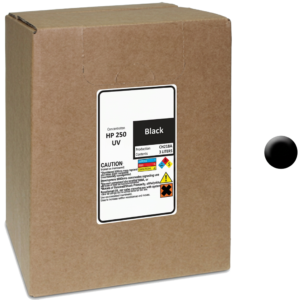
HP Scitex FB250 Compatible UV Ink — Black (3L Bag-in-Box)
$359.00 Add to cart -
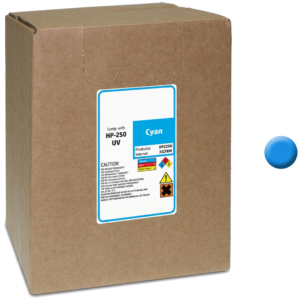
HP Scitex FB250 Compatible UV Ink — Cyan (3L Bag-in-Box)
$359.00 Add to cart -
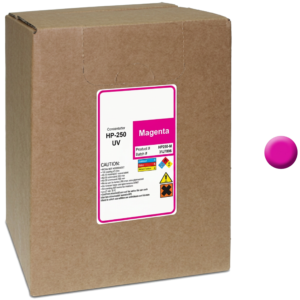
HP Scitex FB250 Compatible UV Ink — Magenta (3L Bag-in-Box)
$359.00 Add to cart -
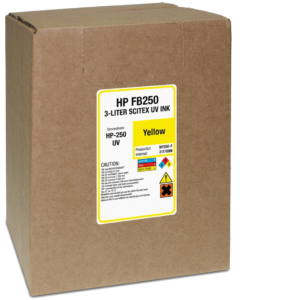
HP Scitex FB250 Compatible UV Ink — Yellow (3L Bag-in-Box)
$359.00 Add to cart -
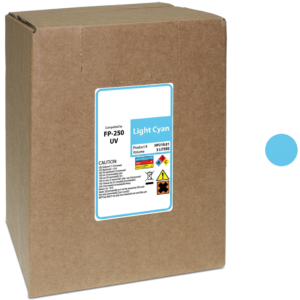
HP Scitex FB250 Compatible UV Ink — Light Cyan (3L Bag-in-Box)
$359.00 Add to cart -
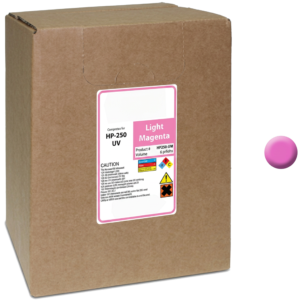
HP Scitex FB250 Compatible UV Ink — Light Magenta (3L Bag-in-Box)
$359.00 Add to cart
HP FB250 — at-a-glance specifications
| Specification | Detail |
|---|---|
| Ink platform | HP FB250 UV-curable pigment-based ink |
| Cartridge size | 3 liters (3000 ml) standard color; 2 liters for White (FB251) |
| Color set | Cyan, Magenta, Yellow, Black, Light Cyan, Light Magenta — plus optional White (FB251, replaces Light Cyan and Light Magenta in White-configured installs) |
| Primary printer fit | HP Scitex FB500, HP Scitex FB700, HP Scitex FB950 |
| Cross-compatibility | HP FB250 can be mixed with HP FB794 on FB550 and FB750 (HP-published compatibility) |
| Print technology | Piezoelectric inkjet, UV-cured, variable drop size |
| White ink shelf life (OEM reference) | 6 months from date of manufacture (matched on aftermarket lots) |
| Color ink shelf life (OEM reference) | 12 months from date of manufacture (matched on aftermarket lots) |
| Storage | Cool, dry, away from direct sunlight — UV ink is light-sensitive in cartridge |
Compatible HP Scitex flatbed printers — full model breakdown
HP FB250 is the UV ink platform for three production flatbed printers in HP’s Scitex lineup, and it cross-fits the newer FB550 and FB750 as a secondary option. Here’s what each machine actually takes:
HP Scitex FB500
The Scitex FB500 is HP’s entry-class production UV flatbed in the 1.65 m × 3.20 m bed family. Built for rigid-substrate work — foam board, corrugated, acrylic, PVC, wood, and direct-to-rigid signage. Runs the FB250 6-color CMYK + Light Cyan + Light Magenta cartridge set as standard. White is an optional upgrade via the HP Scitex FB500 White Ink Upgrade Kit; with the kit installed, the 2-liter FB251 White cartridge replaces the Light Cyan and Light Magenta channels. Typical Tampa Bay applications: retail P-O-P, trade-show graphics, real-estate signage, custom packaging prototypes, exhibit panels.
HP Scitex FB700
The Scitex FB700 is the productivity-tuned production flatbed in the same 1.65 m × 3.20 m bed class — same FB250 6-color cartridge footprint, higher carriage speed and production duty cycle than the FB500. Same White ink option via the FB700 White Ink Upgrade Kit. Production FB700 shops in Tampa Bay typically cycle through CMYK cartridges every few weeks at full production load; Light Cyan and Light Magenta consume slower except on photographic content.
HP Scitex FB950
The Scitex FB950 is the high-end production flatbed in the FB250 ink family — same FB250 cartridge platform, larger bed and higher throughput. Runs the same 6-color FB250 + White FB251 architecture. Most FB950 shops in the Southeast run on monthly recurring CMYK supply because production volume on the FB950 makes single-cartridge orders inefficient.
Cross-fit: FB550 / FB750
HP-published compatibility documentation confirms FB250 inks can be mixed with FB794 on the FB550 and FB750 presses. If you run a mixed fleet — for example an FB700 alongside an FB550 — standardizing on FB250 across both machines is a legitimate stocking strategy. Most production shops keep one platform per press for color consistency, but the cross-fit gives you a stock-out fallback. See our HP FB794 ink page for the FB550/FB750 primary platform.
HP FB250 cartridge SKU cross-reference
For shops searching by exact SKU, here is the HP FB250 cartridge map. Our aftermarket HP FB250 cartridges are matched to each OEM slot position on the FB500/FB700/FB950 ink bay; the labels and packaging are our own, the print system reads them as the correct slot.
| Color / function | OEM HP SKU reference | Volume | Aftermarket replacement |
|---|---|---|---|
| Cyan | CH216A | 3 L | Aftermarket HP FB250 Cyan |
| Magenta | CH217A | 3 L | Aftermarket HP FB250 Magenta |
| Yellow | CH218A | 3 L | Aftermarket HP FB250 Yellow |
| Black | CH219A | 3 L | Aftermarket HP FB250 Black |
| Light Cyan | CH220A | 3 L | Aftermarket HP FB250 Light Cyan |
| Light Magenta | CH221A | 3 L | Aftermarket HP FB250 Light Magenta |
| White (optional, replaces Lc/Lm) | CQ123A (HP FB251) | 2 L | Aftermarket HP FB251 White |
| Printheads | HP Scitex FB500/FB700/FB950 Printhead | — | Quoted separately on request |
Buyers who arrive searching for an exact SKU — for example “CH216A cyan FB250”, “CH219A black FB700”, or “CQ123A white FB251” — land in the right place. Exact-SKU buyer intent is the highest-converting query class for UV ink; tell us the SKUs you’re ordering in the form and we’ll confirm aftermarket fit before quoting.
HP FB250 vs HP FB794 — which one your Scitex actually uses
The single most common HP Scitex flatbed ink mix-up is FB250 vs FB794. Both are 3-L UV-curable cartridge platforms for HP Scitex flatbed printers, but they target different machine generations. Here’s the clean breakdown:
- HP Scitex FB500 — HP FB250 only. Production flatbed; FB250 platform with CH216A–CH221A SKU range. White option is FB251 (CQ123A).
- HP Scitex FB700 — HP FB250 only. Productivity-tuned production flatbed in the FB250 platform. Same CH216A–CH221A cartridge family plus CQ123A White.
- HP Scitex FB950 — HP FB250 only. High-throughput production flatbed; same FB250 cartridge platform as the FB500 and FB700.
- HP Scitex FB550 — HP FB794 primary, HP FB250 cross-compatible. Newer-generation flatbed shipped configured for FB794; FB250 can be mixed with FB794 on the same press per HP-published compatibility.
- HP Scitex FB750 — HP FB794 primary, HP FB250 cross-compatible. Same cross-compatibility as the FB550.
If you run an FB500, FB700 or FB950, FB250 is your only platform. If you run an FB550 or FB750, FB794 is primary but FB250 is a valid cross-compatible option — useful for shops standardizing on one ink line across mixed-generation fleets.
If you’re unsure which platform your machine is configured for, our UV flatbed service team can confirm by serial number and ink-system configuration before we quote.
Symptom-driven entry — when shops actually order HP FB250
Most HP FB250 buyers don’t arrive because they’re shopping ink. They arrive because an FB500, FB700 or FB950 hit a UV-supply event. The most common entry points:
- Color-out on a production rigid run. A specific CMYK color drops below the printer’s low-ink threshold mid-job. Magenta and Yellow are typically first under saturated retail P-O-P or architectural signage coverage. Flatbed shops typically backstop a full cartridge per CMYK color; recurring monthly supply prevents this entirely.
- FB251 White ink degradation. White ink has a 6-month manufacturer shelf life — half the color ink window — and titanium dioxide pigment settling in unused White cartridges is a real failure mode. If your White output is showing density loss, head-to-substrate inconsistency, or banding on White-underprint jobs, cartridge age and agitation discipline are the first things to check before the printhead.
- UV printhead clogs. UV ink cures on light, and stray ambient light reaching nozzles during long idle periods drives clog frequency. Most clog problems are maintenance and idle-time issues, not ink-quality issues — but expired or contaminated cartridges accelerate the rate. If clogs are increasing, check the cartridge stock-rotation discipline before escalating to printhead service.
- Banding on rigid substrates. Banding is usually printhead-side or substrate-handling-side, not ink-side. If banding persists after standard printhead service and substrate-handling checks, our UV flatbed repair team can diagnose before you order more ink.
- White Ink Upgrade Kit installation. If you’re adding White ink capability to an FB500, FB700 or FB950, this is a natural moment to validate aftermarket FB250 supply across the full cartridge set. Quote standard CMYK and FB251 White in one inquiry.
- Fleet standardization on FB250. If your shop runs a mixed fleet — for example an FB700 alongside an FB550 — and you’re considering standardizing on FB250 across both machines via the FB550 cross-compatibility, talk to us before you stock. We’ll size the transition order and quote both presses on one ink line.
- Aging FB500 or FB700 supply chain. The FB500 and FB700 are older-generation flatbeds; some sign shops we supply choose aftermarket FB250 specifically because aftermarket extends the practical operating life of the press by lowering per-cartridge cost on a fully-depreciated machine.
Aftermarket HP FB250 vs OEM HP FB250 — the honest read
UV flatbed shops evaluate ink switches more carefully than roll-to-roll machines because UV ink chemistry interacts with substrate adhesion, cure profile, and printhead longevity. Here’s the read we give every FB500 / FB700 / FB950 shop evaluating a switch:
- Color accuracy. Our aftermarket HP FB250 lots are color-tested against the OEM HP UV color gamut. Print-tested delta-E typically falls within production-acceptable range for retail P-O-P, architectural signage, exhibit graphics, and rigid-substrate sign work. For brand-color-critical packaging prototypes or Pantone-tight retail brand work, we recommend test prints on your specific substrate before committing to a recurring order.
- Printhead compatibility. The FB500, FB700 and FB950 use piezoelectric inkjet heads tuned to the FB250 UV ink rheology. Our aftermarket FB250 chemistry is matched to the printhead’s drop-volume targeting and firing characteristics — viscosity, surface tension, and pigment particle size all spec to the OEM range.
- UV cure profile. The FB500/FB700/FB950 UV cure lamps are tuned to the FB250 photoinitiator package. Aftermarket FB250 lots use a matched photoinitiator system so cure energy and lamp dwell-time settings stay at OEM defaults; substrate adhesion test results stay consistent on the standard rigid substrates these machines run.
- Chip programming and slot reporting. Aftermarket FB250 cartridges carry compatible chip programming so the FB500/FB700/FB950 reads them as the correct slot and reports ink levels normally. The cartridge bay treats them the same as OEM cartridges.
- Cross-compatibility with FB794 stays intact. If you’re standardizing on FB250 across a mixed fleet that includes an FB550 or FB750, aftermarket FB250 stays cross-compatible with FB794 on those presses — same HP-published compatibility envelope.
- FB251 White matches the 2-L OEM cartridge format. Our aftermarket FB251 White is supplied in the 2-liter cartridge format that the FB500/FB700/FB950 White Ink Upgrade Kit expects. Same titanium dioxide pigment loading; same cartridge agitation procedure pre-use.
- ICC profile compatibility. Aftermarket FB250 is ICC profile compatible with standard HP Scitex UV media profiles. Most shops run existing substrate profiles unchanged; for tighter color-critical work, a one-time re-profile against a fresh aftermarket lot tightens delta-E further on the substrates that matter most.
- Cost-per-square-foot on UV. UV ink price-per-square-foot is the line item that gets attention on a production flatbed — heavier coverage and rigid-substrate consumption add up faster than roll-to-roll latex spend. Aftermarket FB250 materially moves that number, particularly on aging fully-depreciated FB500 and FB700 presses where keeping cost-per-print low extends the economic life of the machine.
Shelf life and storage — UV ink-specific handling
UV ink has tighter shelf life and storage requirements than latex or eco-solvent ink. The discipline matters because expired or improperly stored UV ink fails in ways that look like printhead problems but aren’t.
- FB250 color cartridge shelf life: 12 months from date of manufacture (OEM reference, matched on aftermarket lots).
- FB251 White cartridge shelf life: 6 months from date of manufacture — half the color window. White pigment settles faster and the photoinitiator system degrades faster on White formulations.
- Storage temperature: 5–40°C, cool and dry. Hot Florida storage rooms during summer are a real risk — UV cartridges left in non-climate-controlled storage above 40°C lose shelf life rapidly.
- Light exposure: UV ink is photoinitiator-based; ambient UV light (including indirect sunlight through windows) can pre-cure ink in cartridges over time. Store cartridges in original packaging until use.
- Cartridge agitation: FB251 White cartridges in particular need pre-use shaking to redistribute settled titanium dioxide pigment. Follow HP’s published agitation procedure before seating a fresh White cartridge.
Stocking discipline for production flatbed shops: FIFO the bulk supply bay so the oldest cartridge feeds first. Don’t over-stock FB251 White — 6-month shelf life means buying more White than you’ll use in 6 months is wasted spend.
Recurring supply cadence for FB500 / FB700 / FB950 production
Production FB500, FB700 and FB950 shops in Tampa Bay typically settle into one of three supply patterns:
- Monthly recurring CMYK + quarterly Light + White on-demand. Full CMYK monthly; Light Cyan and Light Magenta on a slower quarterly cadence; FB251 White ordered on-demand when a White-workflow job is committed. Best for shops with consistent rigid-substrate output and occasional White jobs.
- Six-week recurring full set. Full 6-color CMYK + Lc + Lm every six weeks. Best for shops with predictable but not daily flatbed production — most FB500 and FB700 shops settle here.
- Monthly White-workflow shops. Shops running steady White-underprint or White-backed translucent work cycle FB251 White at the same monthly cadence as CMYK. White’s 6-month shelf life sets the ceiling — don’t carry more than 5 months of White stock at the shop.
FB950 shops in production are almost always on monthly recurring full-set cadence — throughput is high enough that quarterly orders create stock-out risk.
Note your typical monthly substrate volume or square-footage in the inquiry form and our service network will quote the right cadence sized to your output.
How the inquiry works
- Fill the short form on our contact page with model (FB500, FB700 or FB950), colors needed, and monthly run rate or substrate volume. Tell us if you run White-workflow jobs and whether you need printheads quoted alongside ink.
- Our service network replies with aftermarket HP FB250 pricing, lead time and shipping ETA — typically within 1 hour during business hours.
- Approve once. We ship from Florida to your shop. Recurring orders run on the cadence you set.
Request a quote for aftermarket HP FB250 UV ink
Use our short inquiry form to request aftermarket HP FB250 UV ink, FB251 White cartridges or printheads for your HP Scitex FB500, FB700 or FB950. Tell us the colors and the quantity. Our service network typically replies within 1 hour during business hours.
Order aftermarket HP FB250 UV ink online →
HP FB250 UV ink — frequently asked questions
Which HP Scitex printers use HP FB250 UV ink?
HP FB250 is the primary UV-curable ink platform for the HP Scitex FB500, HP Scitex FB700 and HP Scitex FB950 production flatbed printers. It also cross-fits the newer FB550 and FB750 per HP-published compatibility — FB250 inks can be mixed with FB794 on those presses.
What are the OEM HP FB250 cartridge SKUs?
The FB250 cartridge SKUs are CH216A (Cyan), CH217A (Magenta), CH218A (Yellow), CH219A (Black), CH220A (Light Cyan), and CH221A (Light Magenta) — all in 3-liter cartridges. The White ink is FB251 with SKU CQ123A in a 2-liter cartridge. Our aftermarket replacements match each OEM SKU slot position.
Can HP FB250 and HP FB794 inks be mixed on the same Scitex printer?
Yes, on the FB550 and FB750. HP-published compatibility documentation confirms FB250 inks can be mixed with FB794 on the same FB550 or FB750 press. This cross-fit is useful for shops running mixed-generation fleets or as a stock-out fallback. The FB500, FB700 and FB950 take FB250 only — no FB794 cross-fit on those machines.
What colors does the HP FB250 cartridge set include?
A full HP FB250 cartridge set is 6 channels: Cyan, Magenta, Yellow, Black, Light Cyan, and Light Magenta — all in 3-liter cartridges. White ink is an optional FB251 upgrade in a 2-liter cartridge (CQ123A); with the White Ink Upgrade Kit installed, the FB251 White cartridge replaces the Light Cyan and Light Magenta channels.
What is the shelf life of HP FB250 UV ink?
HP’s published shelf life for HP FB250 color cartridges is 12 months from date of manufacture. FB251 White cartridges have a shorter 6-month shelf life because White pigment settles faster and the photoinitiator system degrades faster on White formulations. Aftermarket lots are matched to the same shelf-life windows. Store cartridges at 5–40°C, cool and dry, away from direct sunlight.
Does aftermarket HP FB250 ink affect UV cure on the FB500, FB700 or FB950?
No, when matched correctly. UV cure depends on the photoinitiator system in the ink and the lamp energy from the printer. Our aftermarket HP FB250 lots use a matched photoinitiator package so cure energy and lamp dwell-time settings stay at OEM defaults. Substrate adhesion test results on standard FB500/FB700/FB950 substrates stay consistent.
Will aftermarket HP FB250 work with my existing ICC profiles?
Yes. Aftermarket HP FB250 is ICC profile compatible with standard HP Scitex UV media profiles. Most shops run existing substrate profiles unchanged; for tighter color-critical work or brand-color-specific packaging prototypes, a one-time re-profile against a fresh aftermarket lot tightens delta-E further on the substrates that matter most.
Why is FB251 White ink shelf life only 6 months?
White UV ink uses a titanium dioxide pigment that settles in cartridge faster than CMYK pigments, and the photoinitiator system in White formulations is more reactive. The combined shelf life is 6 months from date of manufacture. Practical implication: don’t over-stock FB251 White — buying more than 5 months of White cartridge inventory wastes spend. Aftermarket lots match the same 6-month window.
Can I set up a recurring HP FB250 supply schedule?
Yes. Most production FB500, FB700 and FB950 shops in Tampa Bay run a monthly CMYK cadence with Light Cyan and Light Magenta on a slower quarterly cycle. FB251 White is typically on-demand or matched to monthly cadence depending on White-workflow volume. FB950 shops are almost always on monthly recurring full-set cadence because production throughput makes quarterly orders impractical. Note your monthly substrate volume in the inquiry form and our service network will quote the right cadence.
Do you ship aftermarket HP FB250 across the Southeastern US?
Yes. Aftermarket HP FB250 is supplied to flatbed print shops across Florida, Georgia, Alabama, the Carolinas, Tennessee and the rest of the Southeast. Shipping ETAs are included in every quote. UV ink ships in temperature-controlled packaging during peak summer months to protect cartridge integrity in transit.
Related Ink Families
Other HP Scitex and HP Latex ink families we supply (verify compatibility before ordering):
Related services and guides
- HP Scitex flatbed repair — on-site service for the FB500, FB700, FB550 and FB750 in Florida.